These are books that I have read. I remember more when I write in a book and the review it afterwards. Hope you enjoy. Feel free to comment

Saturday, July 25, 2009

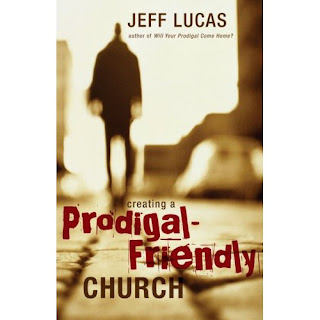
Prodigal Friendly Church and Will Your Prodigal Come Home - Jeff Lucas


It has been a while since I have posted about what I have been reading - but that doesn't mean I haven't been reading! (smile)

These two books are tremendous. I first read Lucas's "Creating a Prodigal Friendly Church" and was humbled by his observations about the church of today. Using the story of the Prodigal Son, he posits the question about how receptive our churches are today to the Prodigal when they finally return home.

Tucked in his observations are some tremendous ancient cultural insights to the story of the Prodigal. Especially helpful were the understanding of the Kezakah and Keffakah.

If you would like further application of the book, I used Lucas's thoughts for a lesson you can view by clicking here. One thought that stayed with me: What would have happened if the Prodigal Son had met the Older Brother before he saw the Father? How many times has that happened in our churches?

Lucas's Second Book, "Will Your Prodigal Come Home" provided an honest asssessment of many of the children and grandchildren of people in our churches today. Lucas was helpful, but brutally honest in his assessment of Prodigals and their families. He spent alot of time discussing what a prodigal is and isn't and how you can deal with them. He also provided insight into the plight of a Christian Family and their Prodigals when they come to church. Very well done book. It too provided fodder for a great lesson which can be viewed by clicking here.

I would highly recommend both books to church leaders and parents.

Tuesday, January 13, 2009

Choices

Just some thoughts after preaching a 17 year old's Funeral.


Monday, May 19, 2008

David Gregory Books


David Gregory is a master at writing modern day parables. Here are the 3 books of his I have read:

Dinner With a Perfect Stranger
A Day With a Perfect Stranger
The Next Level - A Parable of Finding Your Place in Life.

Dinner with a Perfect Stranger is centered around a conversation Jesus has with a successful female lawyer named Nicky. Through the conversation, Jesus deals with different faiths, salvation, why does evil happen and other topics of interest. This book would be a great non-threatening evangelistic tool to give to someone who is searching.

A Day with a Perfect Stranger picks up 10 years later when Nicky's daughter is leaving to go to Art School. It focuses more on a disbelief in God, but again deals with the "why does God allow evil" question. It is not a apologetic in nature as the first book, but is very good none the less.

Both of these books have been made into DVD's. We have shown them both to the Church on Sunday evenings and they have been very very well received.

The Next Level book is the written more for a believer than was the other two. It focuses on trying to please God, serving Him out of love rather than out of duty or even selfishness. I will reread this book again to grasp some of the nuances I might have missed. It did not catch my heart as much as his previous 2 books did.

How Starbucks Saved My Life

I have a terrible habit to which I must confess. Whenever I fly, I have a habit of going to the Airport Book store and buying a book I would probably never buy anywhere else and paying a price that is twice what I could get the book for at Amazon. There ... I feel much better.

Such is the story of how I purchased this book. I was on the way to Albuquerque New Mexico when I picked up this book. For those who know me, I am a sucker for anything Starbucks and this book looked interesting.

How Starbucks Saved My Life by Michael Gates Gill is a book written about Mr. Gill's life experience. He has a seemingly lucrative and successful 30 year career as an Advertising Agent but is shown the door when "downsizing" takes place. He starts his own Agency, but the clients begin to dry up. Coupled with some bad personal decisions, he finds himself loosing most all that he has grown accustomed to in his life.

Family and fortune gone, he finds himself in his favorite Starbucks when he is "jokingly" offered a job. He accepts, stunning both him and the young lady who offered the job. Thus begins his journey into a culture that he was totally oblivious to for so many years.

Here is this WASP man now working for and with a black female manager at a store staff by minorities. And the transformation begins. What is amazing is that they learn from each other. They all struggle with misconceptions, prejudices, and preconceived ideas they have had about each other's culture. It is an interesting journey with Starbucks as a background.

As a bonus, one learns a tremendous amount about company policies of Starbucks, how they take care of their employees, and the inner workings of a store. Also, you learn much about different types of coffee and what goes well with them. After reading this book, I asked for a "Coffee Passport" at my local Starbucks and they gave me one!

This book is well written and shows how people from different ages, backgrounds and cultures can work through to help each other clearing up misconceptions.

I would encourage anyone - especially Starbucks aficionados - to read this book. I really enjoyed it!

Saturday, April 29, 2006

A Quest for Answers: The DaVinci Code

In just a few days the movie, "The DaVinci Code" will be drawing millions to the movie theater. This movie, based on the same titled book, is a fictional best seller that weaves an incredible story of deceit, murder and intrigue about a secret society that has been given the task of keeping secret, shocking and priceless relic.

Many people have wondered, "It the DaVinci Code Real?; Is it Historically Accurate?" The answer is yes - and no. Yes, there are historical people and groups that actually lived mentioned in this book - just as there was actually a New York City and Empire State Building in the movie King Kong. But much of what is presented as fact is simply historically inaccurate. Be that as it may, the DaVinci Code is a great book - but it is a book of fiction.

Josh McDowell in the book, "A Quest for Answers: The DaVinci Code" tells a story of three college students who begin to read the book, "The DaVinci Code" and begin to research some of the historical claims of the book. McDowell writes this book in novel format, but it is heavily footnoted for those who would like to further study the claims the book makes.

If you would like to view an Adobe PDF File of the first chapter, you can click here. If you would like to order a copy of the book, you can click here.

Here is another link to more information about a Believers Response to the "DaVinci Code."

Wednesday, April 26, 2006

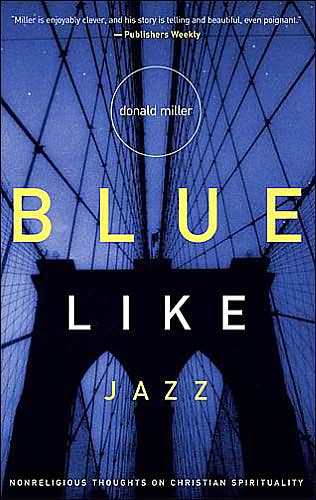
Blue Like Jazz

It has been a while since I have "blogged" on what I was reading. Not that I wasn't reading - just too busy to sit down and write about it. I thought it was time to change that - so here we go.

While writing my Doctoral Dissertation a couple of years ago - I discovered there were people that didn't think like me ... I am not talking about agreeing with me ... but the didn't process information like I did - didn't view reality like I did - didn't even view a relationship with Christ the way I did. I think a little background is in order here.

I was raised by very godly parents - they taught me how to love, taught me how to treat people and taught me how to think - how to reason. It was all very logical - for my father is an analytical engineer - smart too - brilliant actually - he is a rocket scientist. I was raised to think - reason - analyze - weigh out options - black/white - very quantifiable - very empirical. And I love that ... I love bulleted lists - I love precision - I love finding solutions to difficult problems.

And in a sense - that is what Jesus is to me - A solution to a difficult problem. Sin separated me from God and Jesus provided a solution to this relational problem. Big problem - great solution. Makes sense.

But as I began to research my Dissertation - I found that most people didn't see the world or God as I did. It wasn't so clear cut - the "reasoned bulleted convincing arguments" didn't work. It was if I was speaking a totally different language than they were.

So - I have been doing what I have always done - I have been analyzing the situation. (stop laughing) I want to know how to communicate with these people. I want to understand what "makes them tick."

At first I thought they were nuts. Sloppy - messy - artsy/fartsy kind of people - but now I have come to appreciate them for what they are. They are the artist to my engineer. They are the color to my black and white.

They love the same God as I do - but express that love in such different ways - worship Him in such different ways - ways that don't ring my bell - but I do think it rings God's Bell. Actually - I think my of loving and worshipping Him does too - God has a great capacity to receive all kinds of expressions of love from His Children.

Which brings me to this book - Blue Like Jazz by Donald Miller.

Donald Miller is a guy that loves the Lord in an incredible way. This book chronicles many of his thoughts and experiences about people and God.

As I read it – it seemed like a meandering journey – but one that I truly enjoyed and appreciated greatly. In addition – he sees things in a way that I do not – which is marvelous!

It is clear that he has an incredible love for Jesus – and so do I – but we have arrived there in incredibly divergent paths – and we both have something to learn from the others journey.

I have learned to appreciate the journeys, experiences and biblical applicative insights from this book. He writes honestly about his struggles with faith, the church, right-wing politics and especially religion. But what is amazing is that he doesn’t “gloss over” these struggles with religious jargon or clichés. And in the struggles – you gain insight to his soul – and insight to your own.

There are some things in this book that make me uneasy – but to dismiss the insights because of those would be incredibly prejudiced – even judgmental. But still …

I would highly recommend this book to have both a greater understanding of a way of postmodern religious reasoning – and to see journeys to God that are filled with incredibly poignant truths.

Tuesday, April 25, 2006

Velvet Elvis - Rob Bell

Velvet Elvis by Rob Bell is a very interesting and entertaining read. There are many insights that I picked up from this book - particularly those of the Jewish Culture during the time of Jesus. From Bell's insights on the Jewish Culture, Rabbis and Tamildin - the calling of the Disciples by Jesus took on a much deeper and fuller meaning.

However, there are points where Bell stretches my comfort zone with his view of Scripture. His points of questioning whether there is a "constant right" interpretation of scripture troubles me. Even though there are cultural and traditional influences and insights, there is still places where the scripture is clear. While insights might add color, there are still some black and white issues of right and wrong in scripture that cross cultural, generational and geographic lines.

Additionally, I am troubled at some acceptance of habits that would be stumbling blocks in the culture that I live. While as Christians there is freedom, there are times when you don't exercise that freedom because it would be a stumbling block to either new believers or even unbelievers. Again - that is my culture - and Rob Bell does not live in my culture.

I would recommend this book to mature Christian who could filter it though his understanding of his faith and the culture in which he lives his faith out.

Friday, March 04, 2005

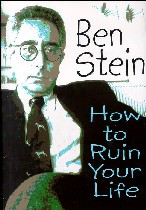
How To Ruin Your LIfe - Ben Stein


Ok. I admit it. I am a big Ben Stein fan. My first exposure to him was in Ferris Bueller’'s Day Off where he played the role of an American History teacher - it still makes me smile when I think of, “Beuller …… Beuller …… Beuller…..” (Thanks Chad). Stein’s part of the boring teacher in Ferris Bueller's Day Off was recently ranked as one of the fifty most famous scenes in American film.

It was only later that I found out that he was an incredibly diverse man. He was a speech writer for both President Nixon and President Ford. I then began reading Monday Night at Morton’s articles published on E-Online. I have enjoyed his wit and insight on many levels and will continue to read most anything he writes.

His book, “How to Ruin Your Life” is a great example of his sarcastic wit. Publisher’s Weekly says, “"Keeping a Chin Up Offering a tongue-in-cheek approach to living well, quiz show host and former White House speechwriter Ben Stein has written How to Ruin Your Life. Asserting that "failure is often a virtual road map to success in reverse," Stein tells readers, "[f]ollow these rules and you're guaranteed disaster. Avoid them, and you're on the high road to achievement...." He proceeds to explain how to "make yourself useless," "be a slob," "convince yourself you're all that matters" and "act like the world owes you." If ignored, his advice is sound and realistic, and may be the perfect way to push recent grads or other impressionable readers in the right direction.”"

This book will make great reading for teenagers who “have all the answers” to life. Adults who read it will laugh - sometimes with embarrassment - at some of the insights Stein offers.

How to Ruin Your Life is a powerful self-help tool in the form of a work of humor. It is sardonic advice, presented in a tongue-in-cheek style, explaining how people can "ruin" their lives. Topics include essays such as "Convince Yourself That You’re The Center of the Universe," "Think The Worst of Everyone," and "You Can Change People."

I thought I would type in one of his 35 lessons as a sample:

Number 27 - Don’t Clean Up After Yourself.

Throw away the apron. I know I'’ve mentioned it before, bit it is worth repeating: You are a perfect being whom others are supposed to clean up after. Just leave your dirty dishes and pots and pans lying around the house. Someone will clean it all up, even if you live alone. Leave your dirty clothes on the floor. That’s not your job. You aren'’t a day worker in a plantation house. You have things to do, worlds to conquer. Look, you'’ve seen Star Wars! Did Luke Skywalker or Han Solo go around doing laundry and folding clothes after ironing? Did either one of them clean the floors after Chewbacca had an accident? Now, it is true that in Gone With the Wind, Scarlett did lower herself to do some cleaning. But that was only meant to show you how bad things had gotten. When things got better, she had servants to do the dirty work for her.

So freaking what if people complain you are a slob? You don'’t live to please others! You live to please yourself, plain and simple! So get down and boogie, and let somebody else clean it all up. And if it gets too awful where you live because it is starting to look and smell like a pigsty, just move someplace else (but make sure you leave your place a complete mess for the next tenant.)

This also applies to emotional and financial messes. So what if you promised to love a man and he gave up his job and moved across the country to be with you? If you get tired of him, just cut him off without even a phone call. So what if you encouraged your partner to borrow money to start a business you were going to work with him on? If you changed your mind, that is his problem! You don’'t have to clean up the messes you have made. That is for the little people.

Your job in life is to please yourself moment by moment. I don'’t think that includes going around with a mop or dustpan, whether real or figurative. Make any mess you want, and then go merrily on your way. It is your right.

I have given this book on a couple of occasions to kids who thought the world truly did revolve around them - and to their credit - with a sly grin - they got the message. With this book - it is difficult not to.

This is not a “Biblical Book” - but it does teach biblical truths - in an effectively sarcastic way. This is a book that will stay on my shelf - and at some point - find its way into Joseph'’s and Nathan’'s (my sons) hands.

Friday, February 25, 2005

Upcoming Books I WIll Read

Well - my reading drought is over. My thirst has returned. It is time to start a disciplined reading program again.

Here is what I will be reading over the next few weeks. Some are leftovers from my previous list - some are new - but all will be read and commented on. Will you join me?

Here is the list

1. Exquisite Agony - Gene Edwards
2. I Flunked Sunday School - Ken Bailey
3. How to Ruin Your Life - Ben Stein
4. Hearing the Master's Voice - Robert Jeffress
5. Healing for the Hurting Heart - June Hunt
6. The American Prophecies - Michael Evans
7. The Politically Incorrect Guide to American History - Thomas E. Woods Jr.

By the way - I have learned that I can save money by purchasing some books on Amazon - but purchasing them used. This is especially true of books that have been out a couple of years.

Remember - one who does not read has no advantage over the person who cannot read!

Sunday, November 28, 2004

The 1 Thing - What Everyone Craves - That Your Church Can Deliver - Thom Schultz


The 1 Thing - What Everyone Craves - That Your Church Can Deliver

I enjoyed reading this book. The authors take the story of Mary and Martha and arrive at the book's thesis: What people want - what God wants - is a close, loving, trusting relationship between God and individuals.

"Luke, through his writing, plops us down in Mary and Martha's house. We get to witness what happens and we come away with a clear understanding of what is most important to Jesus. What would happen if we had plopped down in most churches today? What would we perceive? What would seem most important in the church? Would the 1 thing - an absolutely unmistakable emphasis on growing relationships with Jesus - shine through immediately? Or would well meaning but less important stuff distract from the 1 thing?" pg 22-23

The author then challenges us to develop a friendship with Jesus. "We make friends with Jesus much as we make friends with other people." Qualities of human friendships can provide an example for a relationship with the Lord.

He then offers this "Friendship Filter" for reordering a churches ministry priorities. Which option will best induce and enhance relationship - with other and with Jesus? If you were trying to grow a warm, human relationship using of of these options, which one would you use? Which option best creates a fireside ambiance - a setting that invites relationship building? Which option will telegraph to the world that building close relationship with Jesus Christ is a top priority here?

He then looks at how churches may appear to those who come from an unchurched culture. First - the Police Department - "The police department enforces the law. It makes sure people follow a long list of do's and don'ts. When lawmakers write new laws, the police officers stand on the front line to ensure the publics obedience."

Next the Theater - It is largely a spectator event - the action takes place on the stage - most shows are highly scripted, rehearsed and predictable - Stars provide box office draw. And what is the key objective to the Theater? To fill seats.

Then the Mortuary - Churches that are solemn - serious - certainly not fun.

Next the Seminary - Pastor Lectures - Students take notes and pour over texts - Facts get memorized - Papers get scored - and placement offices scatter the learned throughout the land.

In chapter Ten - the author begins to develop his idea of what church ought to be.
"Since The 1 Thing is a relationship, let's look at the process of developing a friendship. we can think of four simple parts of that process: 1) Introduce Yourself 2) Go Someplace Inviting 3) Make Conversation 4) Do Stuff Together. These steps towards friendship can lead to lifelong commitment."

Again, I think this author has something to say. Many of us have learned how to "Fit in" at church - even if we go to a new one - we can adapt to the "game." But how many people come in our doors searching for something - a relationship with God. But they will never meet Him - until they meet us. Perhaps if we concentrate on fostering a relationship with them - they will foster a relationship with Christ.

Wednesday, November 17, 2004

The Six Fundamentals of Success: The Rules for Getting It Right For Yourself and Your Organization - Stuart Levine


The Six Fundementals of Success - Stuart Levine

I enjoyed reading this book. They were many basic practical words of advice about how to be successful in every area of life.

Levine builds around these six fundementals:

Fundemental #1 - Make Sure You Add Value
Fundemental #2 - Communicate Up and Down, Inside and Out
Fundemental #3 - Know How To Deliver Results
Fundemental #4 - Conduct Yourself and Your Buisiness with Integrity
Fundemental #5 - Invest in Relationships
Fundemental #6 - Gain Perspective

For someone who is experienced in business or leadership, much of this book would be pedantic. However, it is still good to be reminded of some of the most basic practices that lead to adding value to your business.

This book would be of great value to an up and coming leadership prospect or new business owner. He organizes his thoughts in a plain progressive manner. This book can be read in probably an hour to an hour and a half - but implementing all this book has to offer can take a lifetime. The sooner one learns and implements these priciples, the better off they would be.

Enjoyable read - but primarily for new leaders and business leaders.
Posted by Hello

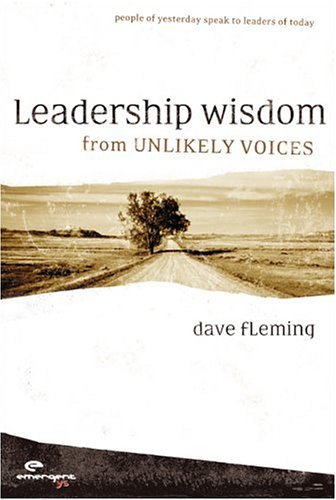
Leadership Wisdom from Unlikely Voices - Dave Fleming


Leadership Wisdom from Unlikely Voices - Dave Fleming

I have always loved reading leadership books. And, over the last 18 months, I have tried to learn more about the Postmodern Movement, mode of thinking and how it applies to Church. Soooo .... when I saw this leadership book written from a postmodern perspective - I thought - "Brilliant!"

Was I disappointed. Perhaps this book would resonate with someone with a postmodern perspective - but I became increasingly frustrated with the "herky-jerkiness" of the book. There were some good thoughts - but no logical progression. (That is my modern mind showing through I fear)

In the second chapter, Fleming tells of falling asleep while driving his car - traveling several miles of twists and turns before awkening in a fog. About half-way through the book - I thought he might have fallen asleep at his keyboard - navigated his way through a few chapters - and left me in a fog!

Again - this may not be the fault of the author. It may resonate with younger leaders in the postmodern movement. If so, that is great. But to me - well - I guess I am old - modern - and just don't get it. (smile)

Let me know if you come to different conclusions after you read this book.
Posted by Hello

Thursday, November 11, 2004

The Radical Leap - Steve Farber


The Radical Leap - Steve Farber

I have always loved reading leadership books. Over the last few years, some authors have adopted one of the teaching methods of Jesus. When He wanted to teach profound truths to people - Jesus told stories. Many business books today are doing the same thing. They tell stories to communicate business and leadership principles.

Steve Farber’'s book The Radical Leap is one such book.

The book is centered on the acronym: L.E.A.P. Four words describe leadership: Love - Energy - Audacity - Proof.

I will not give the story away … but I do think there are some quotes from the book that are well worth sharing.

“The difference between a madman and a professional is that a professional does as well as he can with what he has set out to do and a madman does exceptionally well at what he can’t help doing.”

I underlined this quote in the book. (Always read a book with pen or pencil in hand - make notes - underline - you never know when you will want to go back and review what you has determined is meaningful.) Then I asked myself this question: As Pastor of a church - am I doing a good job - or do I have such a passion for the work that I am the madman that can’t help doing what he loves so much? That is the Love - of the L.E.A.P. You cannot lead if you do not love.

I would hope that you have the fortune to do your work because you cannot help but not do it. I cannot help but do what I have been called - chosen - wired to do. I have to do it. I love it. If it means I am nuts - then so be it. I hope you are able to do that at your job - at your calling.

“Love generates Energy - inspires Audacity and requires Proof. LEAP is simply the Extreme Leader’s active, dynamic expression of love.

Of course - in all leadership books - one has to talk about vision. And vision statements.

A vision statement does not generate energy, love does, great ideas do, principles and values do. A vision statement that comes from a workshop exercise is usually about as energizing and memorable as a saltine cracker.”

“But vision from the heart is - by definition - an expression of love. And not only is that more energizing, it is energy.”

How many times has a company - or a church - concocted a vision statement - put it on a wall and thought it was going to change the world? Vision from the heart changes things.

However, I think my favorite quote from the book is: “If you keep reminding yourself and others about the importance of your work, about the great future you are striving to create, you will generate the energy you need to work through any obstacle and challenge. Your energy will be contagious to others.” That is leadership.

The book is not written to the church - but I can think of no more important work that what God has called the church - and every believer - to. We have been called to change the world. What we do impacts eternity. I think we need to be reminded of that - repeatedly.

I think as Pastor - I need to constantly remind each believer about the importance of the work we have been called to do. That is the “nugget” I took from this book.

Be forewarned - this book has some coarse language in places. But all in all - this book spoke to my heart about communicating the passion that is in my heart for the work that I do. Communicating that passion to the people I work beside. Communicating that passion to the people I have the privilege of leading.

Let me know if you read this book!
Posted by Hello

Friday, November 05, 2004

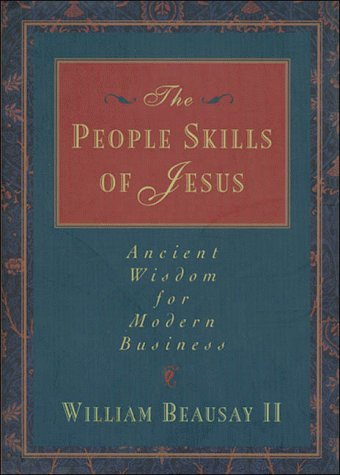
The People Skills of Jesus - Willian Beausay


The People Skills of Jesus - William Beausay

There are many books published today designed to help people learn more about Jesus. However, most of them are exegetical in nature – in essence, they take what the Bible has to say and translate that information into a modern setting. The People Skills of Jesus by William Beausay, II is a different type of book. The author does refer to biblical passages; however, for the majority of the book, it is as if he read the passage of Scripture, closed his eyes and imagined what Jesus did, how He did it, and how He dealt with people. From that point, Beaseay then develops principles to apply to most any relationship. His principles do not necessarily come from biblical passages, yet they do not violate any biblical passages either.

This book is not a “scholarly” work that will speak to the reader who enjoys the intricate nuances of Greek interpretation, but rather is a fresh approach to biblical material that many have heard before.

One such instance is the chapter entitled Finding the Handles. In this chapter, Beausay notes that Jesus skillfully used something that people were doing as a bridge to make a connection. He lists as examples Peter and Andrew, the fishermen, when Jesus said, “Follow Me and I will make you fishers of men.” To the woman at the well, Jesus said, “Whoever drinks of the water that I shall give him will never thirst.” Beausay concludes that finding people’s handles is no more difficult than watching what people are doing, and then taking to them about it. Be on the lookout for opportunities to bridge to others by using the events they are involved with every moment. He continues, “If they look exhausted, talk about fatigue and offer them rest. If they seem upbeat, talk about how excitement improves the atmosphere. If they are involved in a ‘scut’ project, talk about rising above nasty work. Whatever people are doing right now is a conduit for influence for communication and influence.” Again, this is not exegetical work, rather observations using a sanctified imagination.

Another chapter that caught the eye of the author of this paper was entitled, Ugly People. This chapter dealt with the issue of how people react to people who are outside a comfort zone. Again, in one of the more descriptive paragraphs in the book, Beausay describes some of the people that Jesus came into daily contact with. Using as examples beggars, lepers, corpses, and four thousand men who only occasionally bathe, he imagines the barriers that their appearance, odors, and physical disposition might offer. Beausay then translates that into modern day by challenging his readers to be like Jesus. He bridges from then to now by stating that there may not be people around us who are physically scarred, but that there are people who are socially stigmatized and forgotten. He challenges his readers to “talk to the outcasts, befriend the lonely – there are plenty around.”

Each chapter deals with another aspect of Jesus’ treatment of people. In the chapter, What’s Important, he deals with Mary, Martha, and Jesus and concludes, “What looks important often really isn’t.” In another chapter, Artfully Evasive, he deals with the way Jesus often gave evasive answers to probing questions for specific reasons. In professional relationships, he challenges his readers to keep in mind their “swots”: strengths, weaknesses, opportunities, and threats.

Every chapter held a nugget of truth. This book artfully gives insights on relationships with people. This book is well worth reading if one is looking for insights into improving relations with people, although it might have been helpful to tie each chapter to a Proverb that would reinforce the lessons learned.

Thursday, November 04, 2004

A New Kind of Christian - Brian McLaren


A New Kind of Christian - A Tale of Two Friends on a Spiritual Journey - Brian McLaren

Over the last two years, I have read many books dealing with Postmodernism and the Church. Some have been very philosophical – some have been “I found it – you need to – or your church will die ... tomorrow” – but none have done a better job of explaining a postmodern mindset of Christianity than this book.

McLaren weaves a story about Daniel – a disillusioned pastor and Neo – a Science Teacher from the local high school. Through this story – the conversations – emails and phone calls – McLaren about postmodernism. He does not do this from a sociological, philosophical or even religious viewpoint – although all three are dealt with thoroughly – he deals with postmodernism as a historical shift in humanity’s journey.

There is no way I can encapsulate this book into book review form – but I will say that I was enlightened, challenged, encouraged and a bit terrified by this book. It does challenge parts of my theology -- greatly. It is more soft and fuzzy than concise and clean angled.

However, as I finished the book – one thought came to mind. Often times Christianity is something that we do. We mature in Christ by doing these things: church attendance, tithing, sharing our faith, reading our Bibles, etc. But what Neo seemed to be communicating was that Christianity is more about being – who we are – that leads to the right deeds. Again – I am still pondering this book – and will for some time.

I would have difficulty in recommending this book to a new Believer. However, I do think that those who are steadfast in their faith – but seek to communicate how people can connect with God to a new generation – would benefit greatly by reading this book.


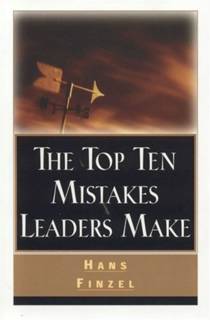
Top Ten Mistakes Leaders Make - Hans Finzel


The Top Ten Mistakes Leaders Make - Hans Finzel

The story is told of the college football coach called practice to a halt to "chew out" one of his big freshmen tackles for making a stupid play. Head bowed, the big tackle stood in silence as the coach called him every kind of name, topping off the blast with, "What's your IQ anyway?" Startled, the tackle looked up, thought for a moment, and then answered, "20-20."


Many leaders could avert “stupid plays” if they would take some time and read The Top Ten Mistakes Leaders Make by Hans Finzel. Finzel states his purpose for writing this book as to help people who find themselves called to lead and are a bit apprehensive about blowing it. He states that the average leader faces at least five problems in learning how to lead. First, leaders often replicate the poor leadership habits they have observed in others. Second, leaders often lack basic skills for common leadership demands. Third, leaders lack good models and mentoring. Fourth, today’s leaders lack formal training in leadership. Fifth, today’s leaders suffer confusion over the conflict between secular and biblical leadership value.


Finzel then takes ten chapters, delineates ten different mistakes, and offers solutions for each. The first mistake, labeled as the number one leadership hang-up, is the top-down attitude. He states this even more convincingly when he writes, “I believe the number one leadership sin is that of top-down attitude autocratic arrogance.” This top-down approach to leadership is based on the military model of barking orders to weak underlings. This approach shows up with abusive authority, lack of listening, dictatorship in decision making, and an egocentric manner.

Finzel offers five reasons to why this style of leadership is most prevalent. First, it is traditional. Second, it is the most common. Third, It is the easiest. Fourth, it comes naturally. Fifth, it reflects the depravity of man. He then offers alternatives to this leadership style, the most appealing is the style of servant leadership. Finzel states that the key of servant leadership is to focus on others.

The second mistake that Finzel deals with is that of putting paperwork before peoplework. He observes the greater the leadership role, the less time there seems to be for people, and the more important peoplework is. He reminds his readers to remember that people are opportunities, not interruptions.

The third mistake is the absence of affirmation. Finzel reminds his readers that everyone thrives on affirmation and praise and that leadership has as much to do with relationships as with getting things done. He then challenges aspiring leaders to learn to read to varying levels of affirmation that those one leads needs.

Dealing with mavericks is the next mistake Finzel covers. He reminds his readers that mavericks often save organizations from the slide toward institutionalism. He also observes that most large organizations will ‘kill off’ mavericks before they can take root. He then challenges leaders to learn to recognize truly useful mavericks.

The fifth mistake Finzel addresses is that of dictatorship in decision making. He challenges leaders to move past the I know all the answers” attitude that stifles the value of individuals. In this chapter, Finzel contends the one who does the job should decide how the job should be done. In Finzel’s opinion, ‘flat’ organizations are the model of the future. Finzel concludes this chapter by saying, “When the best leader’s work is done, the people will say, ‘We did it ourselves!’”

Finzel then deals with the issue of delegation. Finzel observes that nothing frustrates those who work for the leader more than sloppy delegation. He states that there are several reason leaders do not delegate: fear of losing authority, fear of work being done poorly, fear of work being done better, unwillingness to take the necessary time, fear of depending on others, and lack of training and positive experience. Finzel offers five essential ingredients for clean delegation. First, faith in the one to whom you delegate. Second, release from the desire to do it better yourself. Third, relaxation from the obsession that it has to be done the leaders way. Fourth, patience in the desire to do it faster oneself. Finally, vision to develop others with ones delegation freedom.

Finzel labels the seventh mistake as communication chaos. He states that communication must be that passionate obsession of effective leadership. He observes the bigger the group, the more attention must be given to communication and when left uninformed, people tend to dream up wild rumors.

In the eighth chapter, Finzel deals with the mistake of missing the clues of corporate culture. He defines corporate culture as “the way insiders behave based on the values and group tradition they hold. Finzel offers six suggestions to deal with this conflict when it arises. First, as a leader, listen to win. Second, an effective leader will love diversity. Third, continually look for unity. Fourth, learn to like those who are different. Fifth, learn to separate methodology form theology. Finally, long for God’s Glory.

Finzel, in the ninth chapter, discusses the issue of mentorship. In essence, Finzel educates leaders how to prepare to transition leadership to another. He states that leaders make two common mistakes. Leaders tend to stay too long in a position rather than not long enough and leaders who stay too long do much more damage than those who do not stay long enough do.

In the final chapter, Finzel states that many leaders fail to focus enough on the future. It should be the chief preoccupation of the leader to provide vision.

The effectiveness of this book is based on the practical application that Finzel provides for each issue he raises. Not only does he effectively identify the problem, but he also provides direction to avoid the mistakes before they arrive. At the close of each chapter, Finzel provides “Powerpoints” which provide concrete actions to alleviate or avoid each of the ten common mistakes identified.

An additional distinction of Finzel’s book is the Biblical principles he alludes to throughout his writing. This is especially appealing to pastors and leadership in churches. Each of the mistakes Finzel identifies is also prevalent in churches and is not exclusive to the business world. As a pastor, the writer of this paper appreciated the insight and frankness of Finzel’s book.

This is a book that could be recommended to any leader, church or business, novice or experienced, or laymen or professional. It has a tremendous amount to offer each reader.

Saturday, October 30, 2004

Come Thirsty - Max Lucado


Come Thirsty - No Heart Too Dry for His Touch
Max Lucado


I have always enjoyed Max Lucado books. He is a master at telling stories that illustrate biblical truths. One more than one occasion, I have "lifted" an illustrative story to drive home biblical truths as I preach.

This book is built around the following outline:

"Drink with me from his bottomless well. You don't have to live with a dehydrated heart.
Receive Christ's Work on the Cross,
the energy of His Spirit,
His lordship over your life,
His unending, unfailing love.

My favorite part of the book was the closing chapter in which Lucado writes a chapter, "If God Wrote You a Letter." He then bases a letter from God to each reader that is very interesting. He traces Scriptural truths throughout the letter centered on the above outline. It really is powerful.

I would encourage this book for a new believer that is struggling in their walk with God. Lucado does a very good job of clarifying how God is "for" you rather than some God above who is constantly critically scrutinizing people. It focuses on the resources and work that God has provided - the same resources and work that we try and accomplish even though God has completed the work.

This also is a good book for a believer who is trying to gain God's approval through human efforts. Lucado systematically illustrates God's Love and Provisions He provides for His children. They aren’t “earned or deserved - but are gifts - completed gifts - that have already been given.

Lucado also deals with issues such as fear, worry, and guilt in such ways that touch both head and heart. Something that Lucado is masterful at doing.

I enjoyed this book greatly. If you read it - let me know your favorite part!

Posted by Hello

What Books Are Next - November

Here is my reading list for November. I will be reporting on these books in the next few weeks.

Come Thirsty: No Heart Too Dry For His Touch - Max Lucado
A New Kind of Christian: A Tale of Two Friends on a Spiritual Journey - Brian McLaren
The Day I Was Crucified as Told by Jesus Christ - Gene Edwards
Know Fear: Facing Life's Six Most Common Phobias - Ed Young Jr.
Getting Through the Tough Stuff - Charles R. Swindoll
Feeding Your Appetites: Take Control of What's Controlling You! - Stephen Arterburn
Tender Warrior: God's Intention for a Man - Stu Weber
Every Man, God's Man: Courageous Faith and Daily Integrity - Stephen Arterburn
Letters to a Devestated Christian: Healing for the Brokenhearted - Gene Edwards
Exquisite Agony - Gene Edwards

Each Day I am also reading a chapter from A Godward Life - John Piper

By the way, I have taken advantage of ordering many books from Amazon - but using the "Used Book" option found on each selection. I have saved some major money using this option and have had no problems at all.

If you have any suggestions for other books - leave a comment and I will check it out.


Tuesday, October 19, 2004

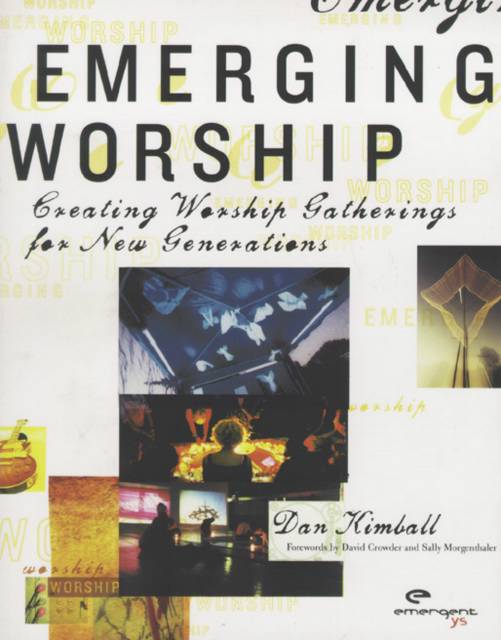
Book Review: Emerging Worship by Dan Kimball


Emerging Worship - Dan Kimball

One of the things we do each week at Staff Meeting is read a chapter or two of a book and talk about it as a Staff. The book we have just completed was this book. This is a book that discusses worship for postmoderns ... or POMO's. I am sure they love that designation.

I am challenged and disturbed by this book all at the same time. This book talks about styles of worship that almost make no sense to me ... but at the same time ... I realize that not everybody is like me. (And all God's People said .... Amen)

I think this book sheds light on worship styles that are emerging in churches that are striving to reach the postmodern population around them. The styles of worship described in this book seem very "touch feely" to me ... but that doesn't mean they are invalid ... they just don't float my boat.

At one point early in the book Kimball writes, "I understand that for some people, this type of rethinking is extremely difficult. Anyone used to doing ministry - and thinking of church and worship services - in a modern way will find it hard to grasp new ways to engage the postmodern culture." pg 16. In the margin, I wrote a big, "That's Me!" Still - much of what Kimball wrote looked like small group study than that of a large worship setting.

This book made me feel old and out of touch at time. It was much like reading a missionary's book to a foreign land. At the same time, it was a challenge to me - for I realize that there are some with this mindset that attend Bayshore now. Please understand - the Bay Area we live in is not - I repeat - NOT - a hot bed of postmodern thinking. (smile) But I still should strive to understand the thinking and reasoning behind this movement. It is difficult - for I am very modern - logical in my reasoning and thinking.

What has been helpful in this book is that it forces me (and the staff) to wrestle with some of the questions that Kimball raises about worship. Also it does a fairly good job of contrasting post modern thinking about church with more modern or traditional view.

There are times though that he comes off as condescending when comparing the two. There were moments when reading the book that I thought he felt he found "it" and if you didn't find "it" you weren't going to be able to reach anybody for the next 30 years. That may be more of an indicator about me than it was about his writing.

Again - much of what he describes as worship does not appeal to me ... but that does not mean that I cannot learn from it. I did learn things from this book. It challenged me to rethink some of the news ways people are striving to "connect" with God.

I think it would be wise for anyone in vocational ministry to read this book.


Monday, October 18, 2004

Chapter Six: How Churches Help to Raise Spiritual Champions

Transforming Children Into Spiritual Champions
Chapter Six: How Churches Help to Raise Spiritual Champions

This was a magnificent chapter – one of the most challenging to me as a Pastor.

I really liked how Barna differentiated between change and transformation in the lives of people. While he addressed this to children, it could be applied to all people. “Change is a shift that may or may not last, tends to happen at a discrete and identifiable moment in time and is often incremental in nature – almost imperceptible in many cases. Transformation, however, is an enduring process in which the person is radically reformed and does not revert to his or her precious condition. The distinction is monumental, because transformation is Spirit driven which change is program driven. Transformation is facilitated but unpredictable, and change is caused and inevitable under the right conditions and stimuli. The most effective churches recognize that the goal is to facilitate transformation, yet they understand they cannot engineer it no matter how sincere, professional, comprehensive and biblical their approach may be. Only God brings about lasting transformation in a persons life.” pg 97-98

Question: Have we as believers in general accepted “change” rather than “transformation” as an indicator of a person inviting Christ into their lives?
Does “change” become “transformation” if the change is permanent?
Can “change” be the outworking of an inward “transformation?”

Most of these questions look more to adult conduct of public professions of faith rather than that of children’s ministry …. But still good questions to ask.

Barna again reiterates the importance of the church and family partnering for effective children’s ministry. “One of the key elements of that ministry philosophy is the acknowledgement that the spiritual development of children is first and foremost the responsibility of the parents and that a church is best poised to assist rather than lead in the process.” pg 98 A churches goal should be to become the greatest friend and best support a parent ever had.

Barna suggests that you can define success in a children’s ministry by three criteria:

  1. There is widespread involvement of the parents in the spiritual development of the children.
  2. The church is strategically equipping parents to help children develop spiritually.
  3. These are transformations in children lives – not the mere recitation of facts, but lifestyle transitions that suggest a deeper renovation of the heart and spirit.

I also like Barna’s “Five Streams of Prayer Offered to God”

  1. Prayer from Teachers about the youngsters
  2. Teachers Praying as a Team
  3. Intercessors praying for Children and Teachers
  4. Entire Congregation praying for Children’s Ministry
  5. Parents praying for their children and teachers.

Barna also observed the effective ministries tend to provide three important elements in balance:

  1. Ministries convey important information and lessons in what the student relates to
  2. Ministries are keenly responsive to the adult-child ratio in their activities.
  3. Ministries balance activities done in small groups with those done in a large group setting.

I think this is incredible information to digest. In January we are going to be moving into a brand new children’s building. This is a great opportunity to reevaluate many area of our children’s ministry and it’s effectiveness. Especially, how the church relates to the efforts to teach and train our children.

As Pastor, I have much to ponder in this area.